
PRP & PRGF vs Surgery for Knee Problems – Which Is Better in 2026?

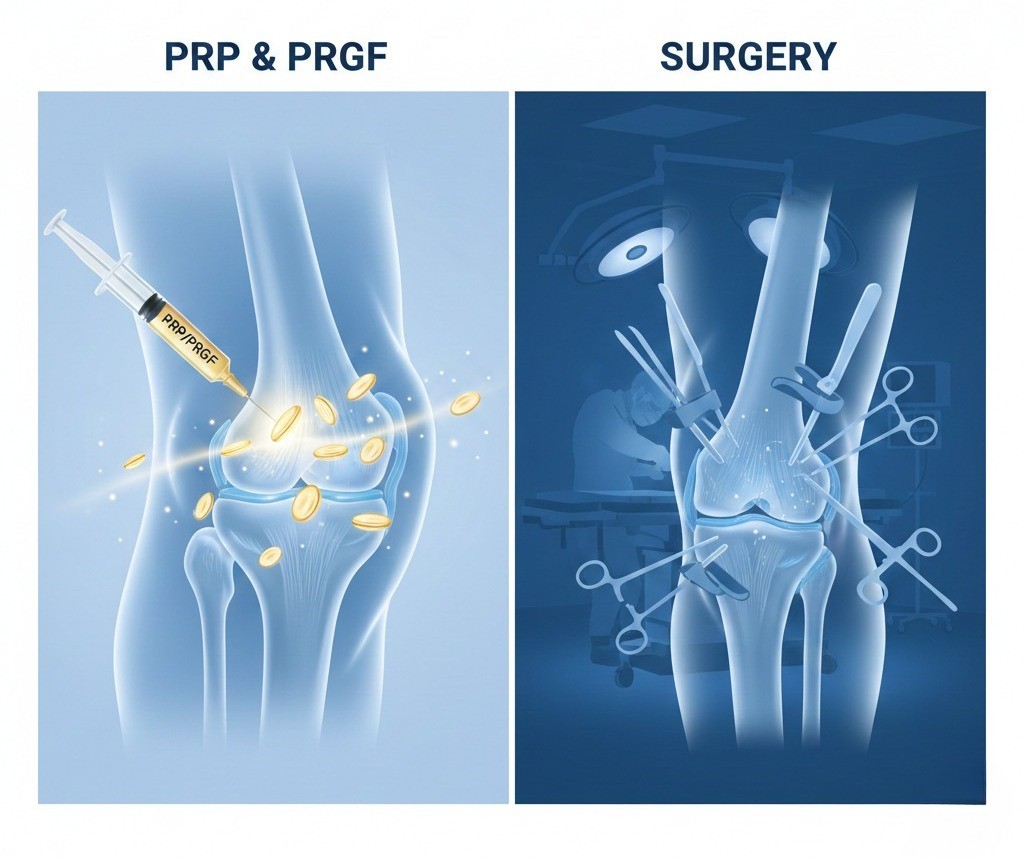
PRP & PRGF vs Surgery for Knee Problems – Which Is Better in 2026?
Knee pain can stop you from doing everyday things—walking, climbing stairs, or even standing for long periods. If you’re dealing with chronic knee problems, you might think surgery is your only option. But here’s what most patients don’t know: PRP (Platelet Rich Plasma) & PRFG (Plasma Rich in Growth Factors) therapy is helping thousands avoid the knife altogether. At N.K. Aggarwal Joints and Spine Centre, Dr. N.K. Aggarwal has seen remarkable results with this regenerative treatment. It’s less invasive, has faster recovery, and uses your body’s own healing power. Before you commit to surgery, understanding knee pain treatment without knee replacement could change everything. Let’s answer the questions patients ask Dr. N.K. Aggarwal about PRP & PRFG treatment for knee pain in Ludhiana.
Frequently Asked Questions
1. Why should I consider PRP/PRGF before surgery?
Surgery should be your last option, not your first. PRP therapy gives your body a chance to heal itself naturally without the risks, downtime, and long recovery that come with surgery. Many patients who were told they needed knee replacement have found relief with PRP and are still walking pain-free years later. It’s worth trying the less invasive route first—you can always choose surgery later if needed, but you can’t undo an operation.
2. How effective is PRP/PRGF treatment for knee pain?
Studies show 70-80% of patients experience significant pain relief and improved mobility with PRP/PRGF. What makes it powerful is that it actually promotes healing not just masking symptoms like painkillers do. The platelets in your blood release growth factors that repair damaged cartilage, reduce inflammation, and strengthen tissues. Patients often report being able to return to activities they’d given up on.
3. What knee problems can PRP/PRGF treat?
PRP/PRGF works exceptionally well for early to moderate osteoarthritis, meniscus tears, ligament injuries, patellar tendinitis, and chronic knee pain from overuse. If you’ve been told you’re “not bad enough for surgery yet,” PRP/PRGF is perfect for that stage. It can stop degeneration in its tracks and help you avoid ever reaching the surgery stage.
4. Is PRP/PRGF really safer than surgery?
Absolutely. PRP/PRGF uses your own blood, so there’s virtually no risk of infection, rejection, or serious complications. You walk out the same day with minimal discomfort. Compare that to surgery: anesthesia risks, potential infections, blood clots, months of rehab, and the possibility that the surgery doesn’t fully resolve your pain. For the best orthopaedic regenerative doctor in Punjab, PRP/PRGF represents the future of knee treatment.
5. How quickly can I get back to normal activities after PRP/PRGF?
Most patients resume light activities within a few days. There’s no hospital stay, no bed rest, no crutches, no extensive physical therapy requirements. You might feel sore for 24-48 hours, but that’s it. Compare that to knee surgery where you’re looking at 3-6 months of recovery, weeks off work, and intensive rehab. PRP/PRGF lets you maintain your life while your knee heals.
6. Can PRP/PRGF really help me avoid knee replacement?
Yes, And this is where PRP/PRGF shines. If you catch knee problems early enough, PRP/PRGF can delay or completely eliminate the need for replacement surgery. Dr. N.K. Aggarwal has treated countless patients who were knee replacement candidates but are now living active, pain-free lives years later. The key is not waiting until your knee is bone-on-bone. Early intervention with PRP/PRGF gives you the best chance of keeping your natural knee.
7. What makes PRP/PRGF better than just taking medications?
Pain medications only mask the problem they don’t heal anything. Anti-inflammatories can actually slow down healing and damage your stomach, liver and kidneys over time. PRP/PRGF addresses the root cause by restoring damaged tissue. You’re not just covering up pain; you’re actually repairing your knee from the inside out. It’s true knee pain treatment in Ludhiana that focuses on healing, not just symptom management.
8. How many PRP/PRGF treatments will I need?
Most patients see results after 3 injections spaced 1-3 weeks apart. Some need maintenance injections after a few years, depending on the stage of disease when the treatment is started. That might sound like a lot until you compare it to surgery – one operation, months of recovery, and no guarantee it solves the problem permanently. PRP is a small time investment with significantly less disruption to your life.
9. What if PRP/PRGF doesn’t work for me?
Even if PRP/PRGF doesn’t give you complete relief, you haven’t lost anything. You still have further regenerative therapy options like Bone marrow and Fat derived stem cell treatments. Surgical options would however always be available, but now you’ve tried the conservative approach first. Many insurance companies and doctors actually prefer seeing patients, try regenerative treatments before jumping to surgery. And honestly, the success rate is high enough that most patients don’t need to go further.
10. Why choose Dr. N.K. Aggarwal for PRP treatment?
As an experienced orthopedic surgeon in Ludhiana, Dr. N.K. Aggarwal, because of his huge experience of 5 decades, working around the world, understands both surgical and non-surgical approaches. That balanced perspective matters you want a doctor who won’t push you toward surgery when a simpler solution exists. At N.K. Aggarwal Joints and Spine Centre, the focus is on regenerative treatments that preserve your natural joint and get you back to living without the trauma of surgery.
Closing Thoughts
Surgery has its place but in 2026, we have better options for most knee problems. PRP/PRGF therapy offers a path to healing that’s safer, faster, and less disruptive to your life. If you’re dealing with knee pain and haven’t explored knee pain treatment without knee replacement, you owe it to yourself to try PRP/PRGF first. The results speak for themselves: patients avoiding surgery, staying active longer, and healing naturally. Don’t let fear or outdated thinking push you into an operating room when your body might heal itself with the right help. Contact Dr. N.K. Aggarwal at N.K. Aggarwal Joints and Spine Centre to learn if PRP/PRGF is right for you. Your knees deserve a chance to heal before going under the knife.
3 most important links beyond our experience