
Can Regenerative Medicine Help You Avoid Joint Replacement Surgery?

Can Regenerative Medicine Help You Avoid Joint Replacement Surgery?
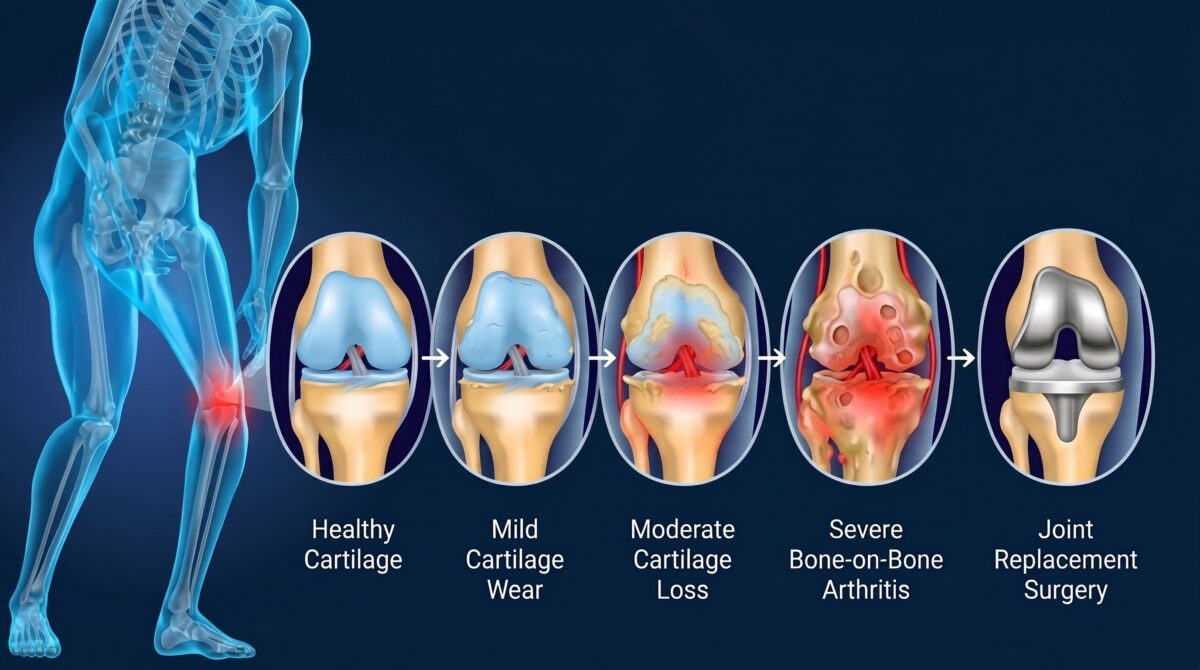
Osteoarthritis is one of the most common indications for orthopedic consultation in the modern age because of chronic pain in the knee and hip. Advanced arthritis may require a joint replacement surgery; however, this may not be the initial or only treatment available. There has been some great progress in the area of regenerative medicine for knee pain in Ludhiana with some minimally invasive biologic therapies that aim to preserve the joint instead of replacing it.
At Joints and Spine Centre, we believe in exploring evidence-based, joint-preserving treatments whenever clinically appropriate. Advanced orthobiologics, stem cell therapy, PRP and Growth Factors are revolutionizing orthopedic treatments by helping to heal tissues, fight inflammation, and enhance joint function. These treatments could be a viable alternative to joint replacement for those who have mild to moderate joint damage.
What Is Regenerative Medicine?
Regenerative medicine is an advanced branch of orthopedic medicine that applies the healing process of the body through biological methods to repair diseased tissue. Unlike conventional treatments that only address the symptoms in the form of pain, regenerative therapies seek to remove the source of pain by regenerating the tissue of the joint.
The primary objectives include:
- Reducing inflammation
- Supporting cartilage health
- Stimulating tissue repair
- Improving joint mobility
- Delaying surgical intervention
Platelet-Rich Plasma (PRP) & Platelet-Derived Growth Factors: Enhancing Natural Tissue Repair
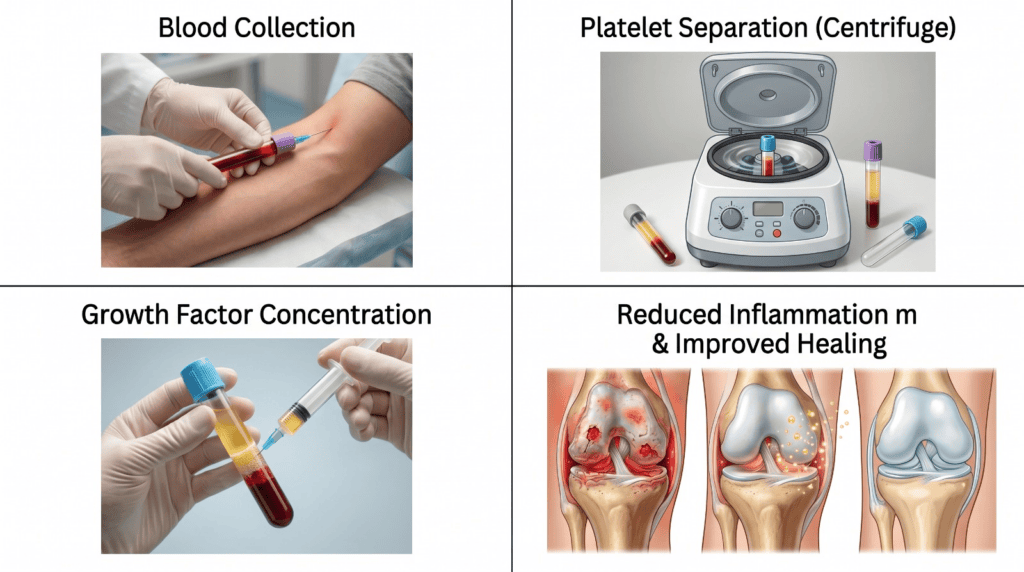
To concentrate platelets from patients’ blood, through a special process platelet-rich plasma (PRP) or Platelet Derived Growth Factor Concenterates are prepared. Platelets secrete growth factors that provide cellular repair and healing and diminish inflammation of damaged joints.
These treatments are frequently used to treat the following conditions:
- Early/Moderate knee osteoarthritis
- Hip joint degeneration
- Tendon injuries
- Ligament disorders
- Sports-related cartilage injuries
From clinical trials, it has been seen that, when combined with the proper rehabilitation, PRP and Platelet Derived Growth Factor Concenterates can greatly enhance pain reduction, mobility, and functional performance.
Stem Cell Therapy: A Biological Approach to Joint Preservation
One of the most exciting advances in the field of regenerative orthopedics is stem cell therapy. The MSCs, usually isolated from bone marrow or adipose tissue, have tissue reparative and regulatory inflammatory properties.
While stem cells can’t create a new joint, they can improve the healing process and support the maintenance of existing cartilage and the slowing of disease progression.
People who might benefit are:
- Mild to moderate arthritis of the knee.
- Cartilage injuries
- Persistent joint pain
- Patients who are active and want to delay joint replacement surgery
Patient selection continues to be vital, and any treatment is always to be based on regulatory approvals and a complete clinical assessment.
Orthobiologics: The Future of Personalized Orthopedic Care
Orthobiologics are biological substances that are naturally occurring and can be used to stimulate and optimize the body’s healing process. Some of the most common orthobiologics used in orthopedic practice today include PRP, Platelet Derived Growth Factor Concentrates and stem cell therapy.
They can have some clinical advantages, such as:
- Improved pain control
- Enhanced tissue regeneration
- Better joint stability
- Increased mobility
- The need to wait for joint replacement surgery
The procedures are generally performed as outpatient interventions and, as such, allow patients to get back to a normal life much faster than conventional surgery.
Is Regenerative Medicine the Right Choice for You?
Regenerative medicine is effective at a specific point when joint degeneration is at a specific point, and the patient is in a specific clinical state. These advanced biological treatments are most effective for those who have healthy cartilage and structural integrity in their joints and can benefit from natural healing. A thorough orthopedic assessment with physical exam and imaging studies can help determine if regenerative treatment is an option.
Some patients who might be suitable for regenerative therapies include those with:
- Mild to moderate OA
- Ongoing knee or hip pain that is limiting daily activities.
- Cartilage injuries or joint wear and tear.
- Sports-related joint conditions
- People who want to try nonsurgical treatment to avoid or postpone joint replacement surgery
Patients with severe joint damage, bone-on-bone arthritis, or joint deformity, however, are not as likely to experience a significant improvement using only regenerative therapies. In these situations, joint replacement surgery may be the best option for regaining pain-free motion and longevity of joint function.
Clinical Assessment Is the Foundation of Successful Treatment
A comprehensive orthopedic examination should be performed before recommending any regeneration treatment. The best treatment approach depends on the patient’s clinical features, digital X-rays, MRI findings, patient expectations, level of activity, and overall joint health.
Personalised approach to ensure the best results without unnecessary procedures.
Conclusion
A crucial element of effective treatment is a clinical assessment. Without an extensive orthopedic assessment, no regeneration treatment should be recommended. The best treatment approach is determined by a variety of factors, including clinical examination, digital X-rays, MRI findings, and patient expectations, level of activity, and overall joint health.
At Joints and Spine Centre, our practice has demonstrated an individualized approach for achieving the best possible outcomes while avoiding unnecessary procedures, ensuring every patient receives personalized and evidence-based orthopedic care.
Source :- https://www.ajrc.co.in/regenerative-medicine-for-arthritis-joint-pain-ajrc.php
https://pmc.ncbi.nlm.nih.gov/articles/PMC11956119/https://pubmed.ncbi.nlm.nih.gov/17551972/
https://pubmed.ncbi.nlm.nih.gov/39398550/
https://pubmed.ncbi.nlm.nih.gov/33101819/