
Role of PRP / Autologous Growth Factors in Osteoarthritis of the Knee

Role of PRP / Autologous Growth Factors in Osteoarthritis of the Knee
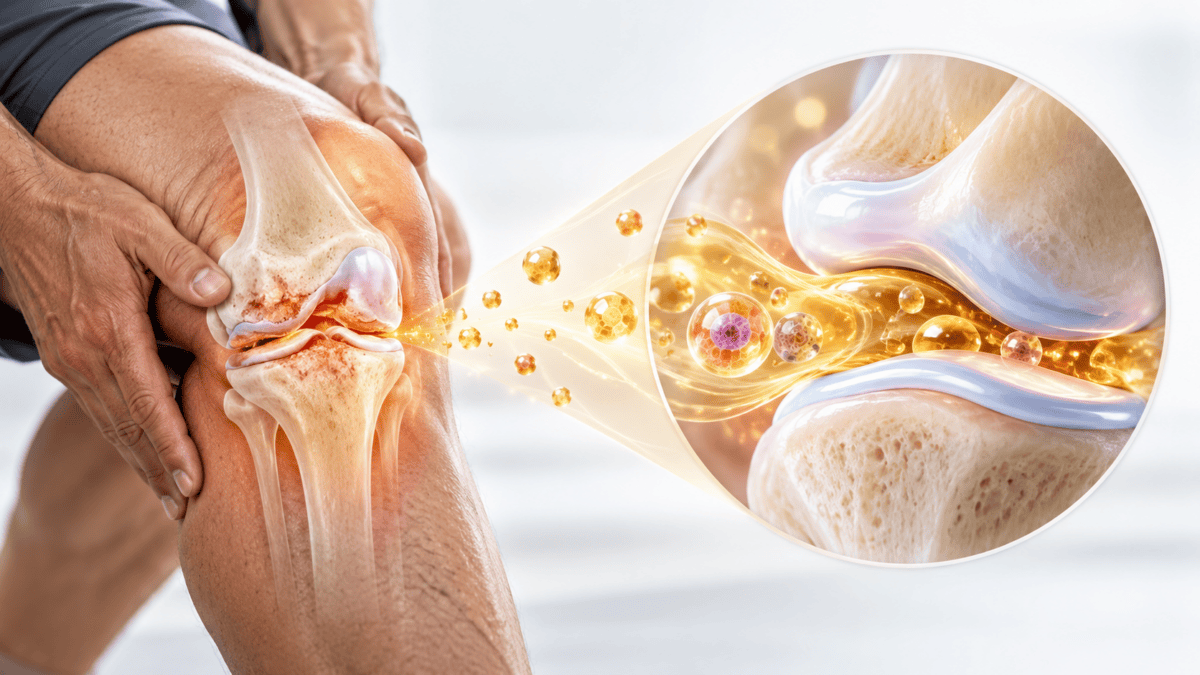
Knee osteoarthritis is associated with pain, stiffness, inflammation and progressive changes in the joint environment. In daily practice, patients commonly present with pain while walking or climbing stairs, stiffness after sitting for some time, difficulty with prolonged standing and gradual reduction in their normal activities. It has now been established that OA knee is a local manifestation of a low grade systemic inflammation, which is immune mediated and slowly progressive.
At N K Aggarwal Joints & Spine Centre, Ludhiana, we use Platelet-Rich Plasma (PRP) and Autologous Growth Factor Concentrate (GFC) as important biological components of our multimodal knee-preservation approach. The purpose is to address the biological environment of the osteoarthritic knee along with lubrication, mechanical loading and other factors contributing to symptoms.
What Are PRP and Autologous Growth Factors?
PRP is prepared from the patient’s own blood and contains a concentrated fraction of platelets and biologically active substances, including growth factors. Autologous Growth Factor Concentrate is similarly prepared from the patient’s own blood and are derived from platelets with the aim of concentrating growth-factor-rich components for intra-articular use.
These preparations are used to support the biological response of the joint. They are different from conventional pain-relieving injections because the treatment is based on using the patient’s own biological material for healing, repair and restoration.
Why Use PRP / Growth Factor Concentrate in Knee Osteoarthritis?
Osteoarthritis involves cartilage damage, inflammation and changes in the tissues surrounding the joint. The biological environment of the knee therefore becomes an important part of treatment.
PRP contains growth factors and other mediators that can influence inflammatory and tissue-repair pathways. Clinical studies have demonstrated improvement in pain and functional scores following intra-articular PRP and growth factor concenterate treatment in knee osteoarthritis.[1][2] The evidence has continued to strengthen. A 2025 systematic review and meta-analysis of 26 randomized controlled trials involving 1,650 knees found that PRP provided significant benefit over Hyaluronic Acid in WOMAC outcomes at both six and twelve months.[2]
What Does the Research Show About Growth Factor Concentrate?
Growth Factor Concentrate has also been directly studied in knee osteoarthritis.
A placebo-controlled randomized study evaluated serial intra-articular GFC injections and reported significant clinical improvement in patients with knee osteoarthritis.[3] More recent randomized evidence has evaluated autologous GFC in patients with Kellgren-Lawrence Grade II and III osteoarthritis, using pain, WOMAC and structural and biochemical parameters as outcome measures.[4] These findings provide a clinical basis for incorporating autologous growth-factor therapy into a knee-preservation programme, particularly where the objective is to support the biological environment of the joint.
PRP / GFC and Hyaluronic Acid: A Complementary Approach
At N K Aggarwal Joints & Spine Centre, we combine PRP/GFC with High Molecular Weight Hyaluronic Acid because the two treatments have complementary roles and they petentiate each other’s effect.
HA contributes to lubrication and the viscoelastic properties of synovial fluid. PRP/GFC provides the biological component. A 2024 systematic review and meta-analysis of 10 randomized controlled trials involving 943 patients found that PRP + HA produced greater improvements in several pain and functional outcomes compared with HA alone.[5] Another meta-analysis of 11 randomized trials involving 1,023 patients also reported better pain and functional outcomes with PRP + HA compared with PRP alone.[6]
How We Use PRP / GFC in the Ludhiana Protocol
At N K Aggarwal Joints & Spine Centre, Ludhiana, we first assess the patient’s symptoms, clinical examination, X-rays or MRI, severity of osteoarthritis, alignment and functional requirements.
PRP or GFC may then be incorporated according to the condition of the individual knee. Depending on the clinical situation, it is combined with High Molecular Weight HA, Oxygen-Ozone therapy, joint lavage, correction of abnormal mechanical loading and rehabilitation. The sequence is individualized. When the knee still has preservation potential, we prefer to use biological treatment as part of a broader treatment pathway rather than depending on a single injection. Though we can not prevent aging, the objective of our treatment is to preserve the joint, and prolong the pain free quality of life, leading to healthy aging.
Who May Be Considered?
PRP and autologous growth-factor treatment are primarily considered when knee preservation remains a reasonable clinical objective. Patients with early or moderate osteoarthritis, and selected cases of early Grade III disease, may be considered for biological treatment.
Severe bone-on-bone Grade IV osteoarthritis with major deformity and extensive structural damage requires a different treatment approach. Even in many of these patients who are unfit for surgical treatment and want to avoid major surgery, we have been able to achieve good results. We consider the condition of the knee, symptoms, imaging findings, alignment, activity level and general health before planning treatment.
PRP / GFC Within the Ludhiana Protocol
PRP and Autologous Growth Factor Concentrate form an important biological component of Dr. N. K. Aggarwal’s “Ludhiana Protocol for Multimodal Knee Preservation” which includes local and systemic treatment.
The local treatment combines biological treatment with lubrication, management of inflammation, mechanical correction and rehabilitation according to the requirements of the individual knee.
For us, PRP/GFC is therefore not treated as an isolated injection. It is used as part of a structured knee-preservation strategy, with the aim of maintaining function and preserving the natural knee for as long as clinically possible.
Medical References
[1] Pelluri R, et al. Effect of platelet-rich plasma versus placebo or corticosteroid for knee osteoarthritis: A systematic review and meta-analysis. J Clin Orthop Trauma. 2025;62:102870.
PubMed: https://pubmed.ncbi.nlm.nih.gov/39882511/
[2] Bagheri K, et al. Platelet rich plasma compared to viscosupplementation in knee osteoarthritis: A systematic review and meta-analysis. J Exp Orthop. 2025;12(3):e70335.
PubMed: https://pubmed.ncbi.nlm.nih.gov/40689098/
[3] Saraf A, et al. Serial intraarticular injections of growth factor concentrate in knee osteoarthritis: A placebo controlled randomized study. J Orthop. 2023;37:46-52.
PubMed: https://pubmed.ncbi.nlm.nih.gov/36974096/
[4] Shah S, et al. Efficacy of intra-articular Growth Factor Concentrate in knee osteoarthritis: A randomized controlled trial. J Orthop Case Rep. 2026;16(7):528-535.
PubMed: https://pubmed.ncbi.nlm.nih.gov/42428370/
[5] Gao J, et al. Efficacy and safety of platelet-rich plasma and hyaluronic acid combination therapy for knee osteoarthritis: A systematic review and meta-analysis. Arch Orthop Trauma Surg. 2024;144:3947-3967.
PubMed: https://pubmed.ncbi.nlm.nih.gov/38972025/
[6] PRP + HA versus PRP monotherapy for knee osteoarthritis: A systematic review and meta-analysis of randomized controlled trials. 2024.
PubMed: https://pubmed.ncbi.nlm.nih.gov/39819683/