
Use of Ozone in OA Knee

Use of Ozone in OA Knee
Osteoarthritis (OA) is a progressive condition of the knee caused by the degradation of the cushions of the cartilage that protect the joints. Knee Osteoarthritis (OA) affects millions of people globally. It is caused by the progressive damage of the cartilage covering the ends of bones that leads to pain, stiffness, swelling, and a decreased range of movement. Walking, standing, or ascending stairs might eventually become challenging. Traditional management approaches such as physiotherapy and surgery remain in central roles; however, recent research in the field, new and innovative, minimally invasive and regenerative care treatments have begun to emerge. Ozone Therapy is one of such innovative ways of treatment.
At N. K. Aggarwal joints and Spine Centre, ozone is used in the overall management of knee osteoarthritis to treat the patients so that they can gain better mobility, quality of life, and alleviate the need or at least postpone the invasive treatments.
How Medical Ozone Supports Joint Healing?
Medical ozone helps heal joints by creating a beneficial environment in the joint. In osteoarthritis, continuing inflammation and decreased oxygen can cause damage to the cartilage, pain, and stiffness. At specific medical doses, ozone improves local blood circulation and has an effect on inflammatory processes in the joint. These can help to reduce pain and get the joints moving properly. The ozone therapy stimulates our body’s own antioxidant and repair processes, repairing damaged tissues and inhibiting degeneration. This frequently means an improved quality of life for patients, without the need for penetrating surgery.
How Is Ozone Therapy Carried Out?
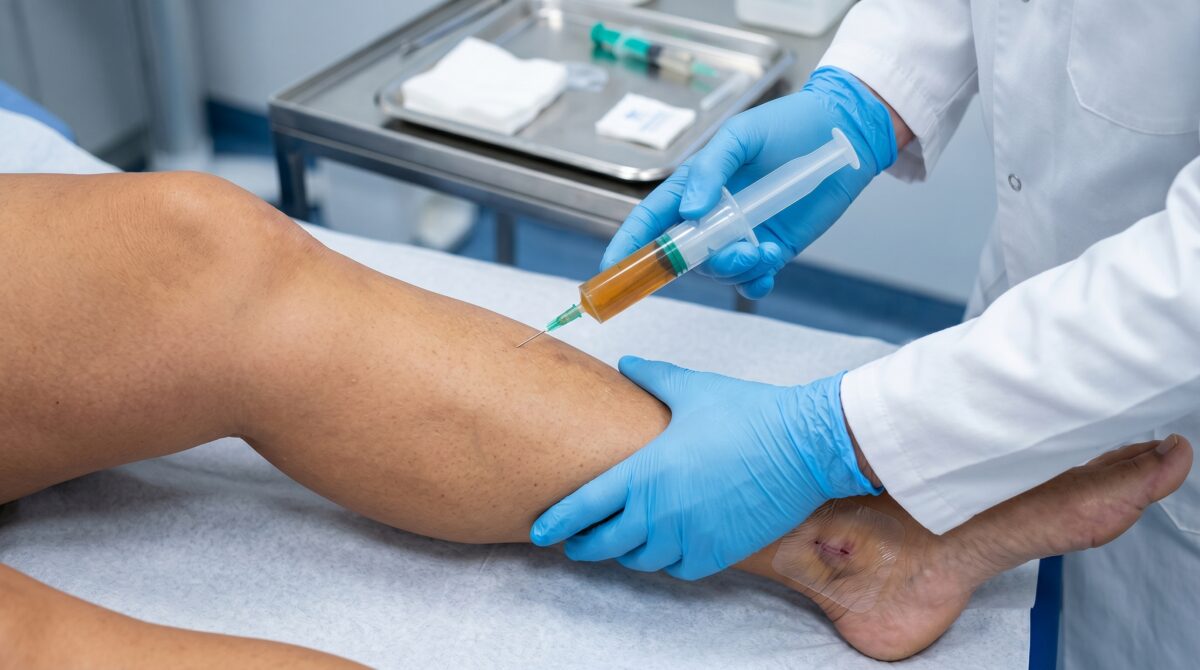
Knee osteoarthritis ozone therapy is normally carried out as an outpatient therapy inside sterile conditions. A gas mixture composed of medical oxygen and ozone is made in a specific ratio, and then injected directly into the affected knee joint. The process takes about five minutes and is relatively speedy. For some patients, ultrasound imaging guidance might be employed to make sure the injection is placed correctly.
Patients generally have little pain during the procedure and can resume normal activities shortly after the procedure. Repeat injections might be needed depending on how severe the osteoarthritis is and how the patient responds to the treatment, to reach optimal results. As the procedure is performed with a minimum of instrument insertion, recovery is usually quite quick relative to surgical methods.
Why Is Ozone Therapy Used in OA Knee?
Ozone therapy is mainly employed in knee OA because it can help mitigate underlying inflammatory mechanisms that lead to pain and joint dysfunction. Osteoarthritis is not just about cartilage wear; it is also accompanied by chronic inflammation in the joint, which leads to further breakdown of tissue and contributes to symptoms.
Ozone therapy helps alleviate pain, minimize swelling and makes joints more flexible. Moreover, ozone triggers processes in the body that promote tissue regeneration and metabolic activity, which contribute to a healthier setting in the damaged joint.
When conventional treatment methods have failed to provide sufficient relief or patients do not want surgery, ozone therapy can be used as an effective adjunct in the treatment, for many patients.
Benefits of Ozone Therapy for Knee Osteoarthritis
Ozone therapy can provide an experience of critical advantages to patients, such as:
- An improvement in the pain and ache.
- Enhanced mobility and flexibility of the joint.
- Reduced inflammation and swelling.
- Improved activity functioning
- Less dependence on painkillers.
- Treatment with minimal downtime and minimal invasiveness.
- Risk of not requiring surgery to fix the problem early on.
The degree of improvement is different for each person, depending on the severity of the disease, age, activity level, and general condition of the joints.
Who Can Benefit from Ozone Therapy?
In most patients with mild to moderate knee osteoarthritis, symptoms continue despite conservative treatments, so ozone therapy is often used. The judgment of whether or not ozone is beneficial to a certain patient must be determined by an experienced Orthopedic surgeon in Ludhiana surgeon who thoroughly examines them.
Conclusion
Ozone therapy is a novel and minimally invasive form of treatment in the management of osteoarthritis of the knee. Its role in reducing inflammation and in optimizing the use of oxygen in tissues, as well as promoting endogenous healing processes have benefited many pain sufferers and improved their mobility. Dr. N. K. Aggarwal offers an individualised approach towards pain control and optimization of knee function by the use of ozone therapy in managing knee Osteoarthritis. The regenerative approach of orthopaedic treatment and management has gained the interest of many doctors and patients due to its many benefits.
Source :-https://alleviatepainclinic.com/ozone/
https://pubmed.ncbi.nlm.nih.gov/41496305/
https://pmc.ncbi.nlm.nih.gov/articles/PMC10912569/
https://pubmed.ncbi.nlm.nih.gov/30387426/