
Orthobiologics in Knee Arthritis: Understanding Autologous Healing Options

Orthobiologics in Knee Arthritis: Understanding Autologous Healing Options
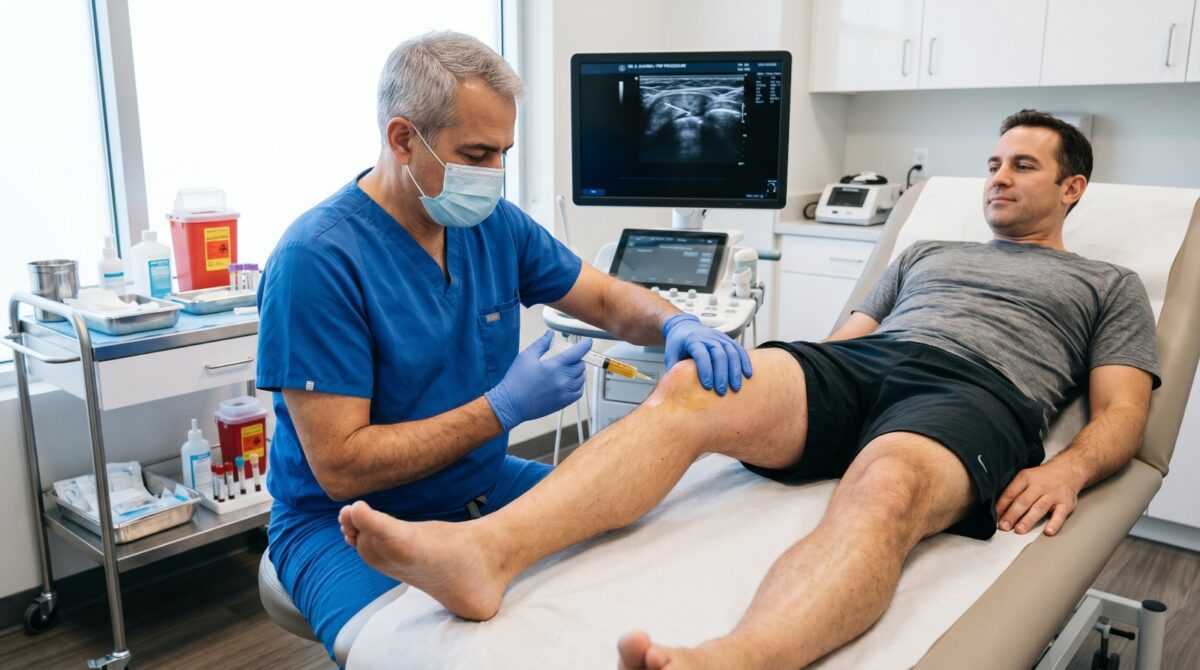
Treatment for joint and musculoskeletal conditions is taking a new direction with orthobiologics. These therapies harness bioactive components from the patient’s own body, providing a less invasive and regenerative approach to joint degeneration, damaged ligaments and torn tendons. At Dr. N. K. Aggarwal Joints & Spine Centre, cutting-edge orthobiological treatments – such as PRP, Growth Factor Concentrates (GFC), fat cell and bone marrow treatments – are used in conjunction with other supportive therapies to promote healing.
Understanding Orthobiologic Treatments
Orthobiologics are biological products made from substances found in the patient’s own body (autologous) to help repair and regrow tissues. These can be fat (adipose), bone marrow, and blood products such as PRP and GFC. They aim to decrease pain, repair damaged tissues and have an anti-inflammatory effect.
Three Essential Sources Supporting PRP and Regenerative Therapy
Three main sources of the human body enhance healing responses: blood, fat cells and bone marrow. The most common and widely utilised is PRP and its source is blood. PRP is rich in growth factor-containing platelets. Adipose tissue (fat cells) provides a plentiful source of mesenchymal stem cells which aid in tissue regeneration and are also anti-inflammatory when paired with PRP. Bone marrow, meanwhile, contains a rich source of both stem cells and growth factors, being an excellent option for more complex tissue regeneration. These three sources complement each other to improve and boost natural healing processes of the body in orthobiologic therapies.
Blood-Derived PRP: The Foundation of Regenerative Therapy
Plasma with a high concentration of platelets (PRP) is derived from blood. Blood is collected from the patient and centrifuged to increase the number of platelets. Platelets are rich in growth factors which play an important role in tissue regeneration, collagen synthesis, and anti-inflammatory action.
The treatment is safe, minimally invasive, fast and has a short recovery time. PRP derived from blood is used as first-line treatment and can also be used in combination with fat cell-derived and bone marrow-derived PRP treatment for knee pain for better efficacy.
Fat Cell-Based Orthobiologic Treatment
Fat contains high concentrations of mesenchymal stem cells (MSCs) that are potent anti-inflammatory and regenerative cells. These cells are obtained via a minimally invasive liposuction surgery and the regenerative part is extracted.
Orthobiologics derived from fat tissue are effective in repairing joint cartilage, repairing soft tissue and reducing inflammation. Fat cell therapy is more potent when used in conjunction with PRP derived from blood. PRP activates and promotes stem cell activity and its growth factors enhance the healing environment in the joint.
Products of Fat Cell-Based Orthobiologic Treatments
- Adipose-Derived Stem Cell (ADSC) Therapy
- Stromal Vascular Fraction (SVF) Injections
- Microfragmented Adipose Tissue (MFAT) Therapy
- Lipoaspirate-Derived Regenerative Cell Concentrate
- Adipose-Derived Growth Factor Injections
Bone Marrow-Based Orthobiologic Treatments
Bone marrow aspirate concentrate or BMAC, for short. It is another really good source of stem cells and growth factors. It is commonly scraped off the pelvic bone with a special needle. Hematopoietic stem cells and mesenchymal stem cells are situated in bone marrow and are important in the healing of damaged tissues.
Advanced degeneration of joints and complex orthopedic conditions are usually advised to be treated with bone marrow. The use of PRP derived out of blood in combination with bone marrow concentrate is capable of increasing the regenerative effect through amplification of cell signaling and speeding up the healing process. This synergy contributes to enhancing the quality of tissues and aids in long-term recovery.
Products of Bone Marrow-Based Orthobiologic Treatments
- Bone Marrow Aspirate Concentrate (BMAC)
- Mesenchymal Stem Cell (MSC) Concentrate
Role of Platelet-Rich Plasma (PRP)
PRP serves as the bridge between blood, fat cell and bone marrow therapies. It is extracted from blood, but it does more than just stand alone. PRP amplifies the therapeutic properties of fat and bone marrow stem cells, improving regenerative therapies. PRP’s capacity to promote healing, lower inflammation, and regrow tissue are key components of orthobiologic treatments.
Role of Growth Factor Concentrate (GFC)
The Growth Factor Concentrate (GFC) is a higher concentration form of PRP treatment. The platelets are processed in such a way as to produce and exude a more highly concentrated version of growth factors. This makes GFC a more concentrated and sophisticated approach compared to a more generalized approach. GFC only involves the concentrated, active healing proteins without the white blood cells or red blood cells. GFC stimulates repair of the tissue, decreasing inflammation and increasing healing in chronic conditions, it may also be used on its own or with other fat cell and bone marrow treatments.
Choosing the Right Approach
The decision to use blood platelets (PRP), GFC, fat cells, and bone marrow for orthobiologic treatment varies based on the severity of the condition, the patient’s health, and desired outcomes. At Dr. N. K. Aggarwal Joints & Spine Centre , treatments are tailored to strategically use these approaches for optimal results.
conclusion
The cornerstones of orthobiologic treatments are blood, fat cells and bone marrow products. These techniques utilize the body’s own healing capabilities for safe and effective long-term management of joint and musculoskeletal pain. The right professional paired with regenerative techniques will help you improve your lifestyle.