
How Orthobiologics Are Improving Spine Surgery Recovery Outcomes

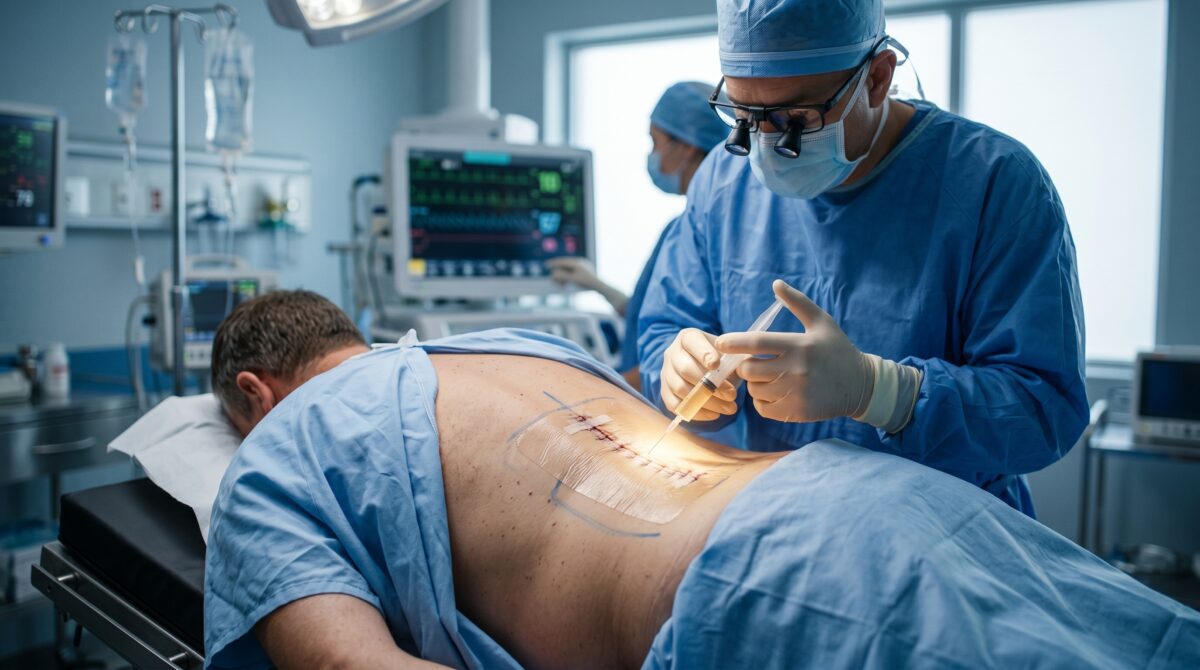
Orthobiologics are increasingly being integrated into contemporary spine care protocols as an adjunct to surgical management. In spinal procedures, particularly herniated disc repair in the lumbar spine, the recovery process will rely on the precision of the surgery in addition to the body’s response to healing. Dr. N. K. Aggarwal Joints & Spine Centre Centre is conducting studies into the use of PRP as a tissue repair, inflammatory modulation, and overall functional recovery supporting modality.
Biological Foundation of PRP Therapy
PRP is a blood-based concentrate, using the patient’s own blood. It is made using the process of centrifugation to separate platelets from the plasma in a highly concentrated fraction. These platelets carry important growth factors and cytokines which are responsible for the regulation of important biological functions such as inflammation control, cellular proliferation, angiogenesis and extracellular matrix remodeling.
PRP coming from the patient’s own body tissue has excellent biocompatibilities and very low adverse immunological reactions. In the field of orthopedic hospital in Ludhiana medicine, PRP can be used as a biological stimulant and accelerator of intrinsic healing processes.
Role of PRP in Spine Surgery Rehabilitation
Patients often experience inflammation, soft tissue irritation and delayed muscle reconditioning following spine surgery, particularly after a lumbar disc procedure. All of these factors can lead to chronic pain and to a slower recovery.
PRP orthobiologics are used as an adjunct to surgical care and used to enhance the biological healing environment. The concentrated growth factors may help to control inflammatory cascades and promote repair of peri-spinal soft tissue structures such as ligaments, paraspinal muscles and annular disc structures.
This enhanced biological reaction could lead to less post-operative discomfort and quicker rehabilitation program initiation and progress, which are supervised in a clinical setting.
Clinical Application in Lumbar Herniated Disc Repair
PRP has been added to some of the postoperative recovery plans at Dr. N. K. Aggarwal Joints & Spine Centre for lumbar herniated disc repair cases. Patients usually have problems with nerve root compression, inflammatory changes and structural disc damage that necessitates surgery.
Recently a clinical case was performed where PRP was used as a part of the post-operative support program after a lumbar disc repair. The goal was to improve local tissue healing and maximise the micro-environment of the damaged spinal segment. From a clinical point of view, this method was linked to better initial pain control, and better rehabilitation exercise tolerance, leading to a more structured rehabilitation pathway.
ACP Max™ System and PRP Optimization
The effectiveness of the treatment using PRP is closely related to the quality of the platelet preparation. The ACP Max™ system is based on a double spin centrifugation technique that creates very concentrated PRP products.
This system can raise platelet counts up to about 12 times the baseline amount while selectively decreasing the number of excess red blood cells and leukocytes. Such a decrease in the inflammatory components of cells is clinically relevant as it could possibly reduce unnecessary inflammatory cellular response during the postoperative period, allowing for a more controlled healing environment in spine surgery.
Clinical Significance in Spine Surgery Outcomes
PRP Orthobiologics does not replace surgical intervention, but rather, it is a scientifically-based tool that complements surgery and aids recovery. They play a clinical role in enhancing tissue regeneration process, decreasing inflammation-related discomfort and facilitating early functional restoration.
The use of PRP in the context of a broader rehabilitation program, as part of a multidisciplinary framework at healthcare centers like Dr. N. K. Aggarwal Joints & Spine Centre, can impact patient-reported outcomes and recovery paths after lumbar spine surgery.
Conclusion
Orthobiologics are a very important new development in the field of regenerative spine care. Through its natural ability to heal, PRP can enhance recovery from spine surgery, especially in more complex surgeries like lumbar herniated disc repair. As the clinical evidence continues to evolve and as the preparation techniques such as ACP Max™ are improved, PRP is increasingly becoming an important part of contemporary spine rehabilitation protocols at Dr. N. K. Aggarwal Joints & Spine Centre.
Source :-
- https://wexnermedical.osu.edu/brain-spine-neuro/spine-diseases-conditions/spine-orthobiologics
- https://journals.sagepub.com/doi/10.1177/30498929251414660
- https://www.orthospecialistsjacksonville.com/orthobiologics-treatment-for-the-spine-orthopedic-surgeon-jacksonville-fl/